
BUILDING BRIDGES
SOME PEOPLE CALL IT 'THE MIDDLE EIGHT', OTHERS 'THE RELEASE'. EITHER WAY, IT'S THE KEY TO A HIT..

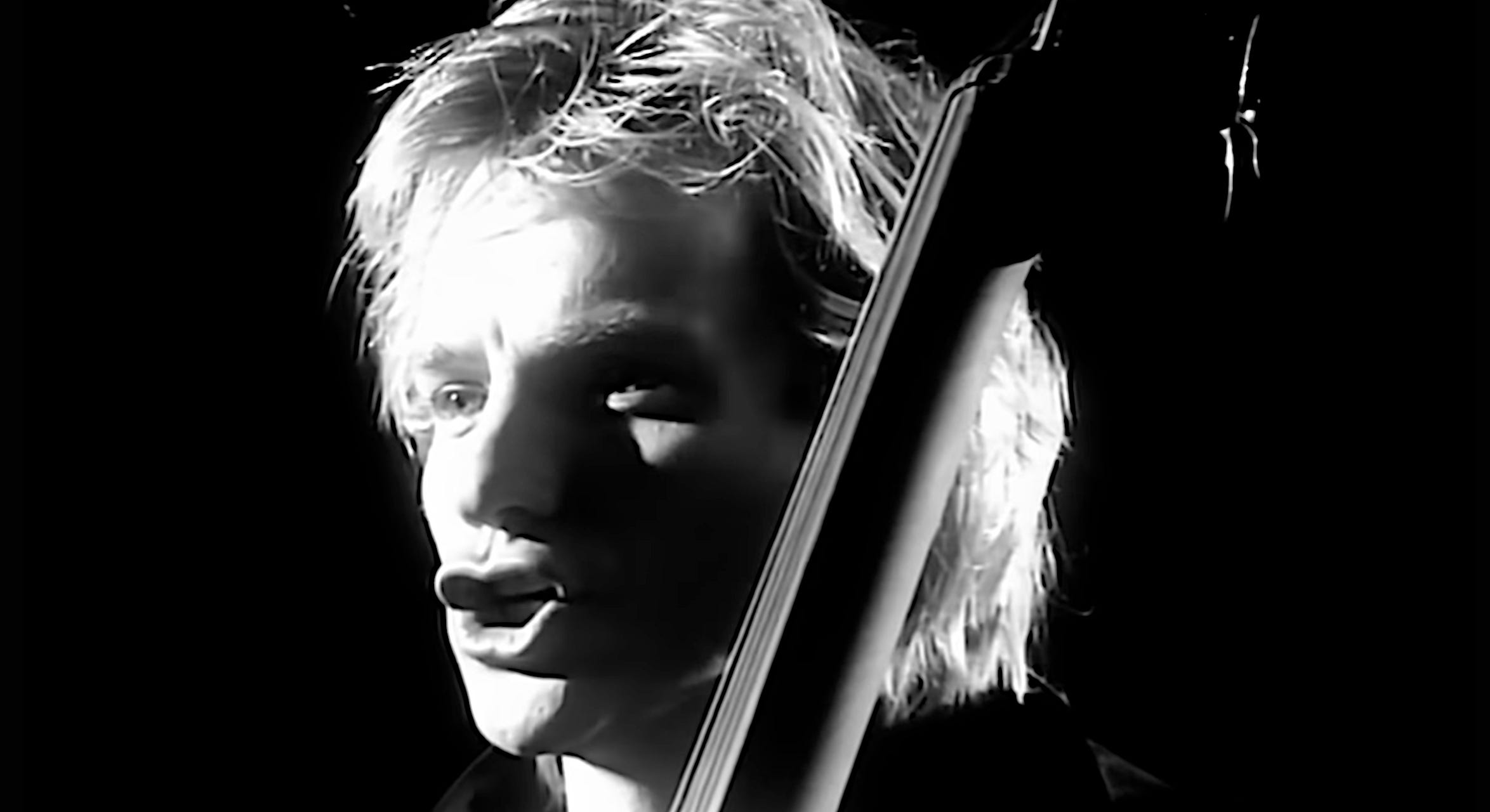
Songs depend on good structure. Unfortunately, songwriters can never agree what the different bits should be called. The most disputed term is “the bridge”.
In Britain, it’s the section between the verse and the chorus. But Americans call that the pre-chorus.
In contemporary pop, the bridge is the extra bit after the second chorus whose principal function is to stop the listener noticing they’ve already heard everything twice.
And then there’s the genuine thing. The B section of a 32-bar song built from an A-A-B-A construction. In Britain, musicians call it the middle 8, but for this piece I’ll stick to bridge. And that’s what I want to talk about.
Paul McCartney was flippant. “It suddenly takes you somewhere else and then resolves up its own tail.”
Elton John was respectful. “Anyone can write a verse and a chorus. The trick is writing the bridge.”
The point is - however strong a melody might be, repeating it for a third time is rarely a good idea. Which is where the bridge comes in. It shifts the harmony to somewhere new and moves the melody’s centre of gravity. It also gives the lyric a chance to have some new thoughts.
The best ones do something quite unsettling. With just a few words, or an unexpected chord change, they somehow reframe what you’ve been listening to so that when it returns it has a slightly different meaning. What sounded confident a moment ago now contains doubt. What felt like desire turns out to be regret.
The bridge’s golden age was 1920s Broadway. Writers like Irving Berlin, Jerome Kern and Cole Porter used it as the moment to show a song’s worth. The bridges they wrote for songs like Blue Skies, The Man I Love or Let’s Do It, set a benchmark that every subsequent songwriter had to match.
One of the greatest bridges came a decade later - Over the Rainbow - written for Judy Garland in 1939. It should be framed and hung in every music school as a model of how it should be done.
The song opens by dreaming of a faraway paradise. The first word rises by an octave in one step, which represents the sheer improbability of the dream, and builds tension. Then it repeats. But when it reaches the bridge the melody line softens and ripples between two notes - “Someday I’ll wish upon a star.” It dissolves the tension and the dream suddenly seems possible. So when the song comes back, the place beyond the rainbow begins to feel real – somewhere that could and should be reachable – not dissimilar to John Lennon’s Imagine. The lyricist, Yip Harburg, called it “dare to dream.”
These great pre-war bridges may have set the gold standard, but when rock arrived, it wasn’t intimidated. Sting’s Every Breath I Take, begins with the voice sounding cool and somewhat sinister. “I’ll be watching you” suggests retribution.
But the bridge gives the game away. “Can’t you see… how my poor heart aches?” The mask slips – he’s desperate. And when the chorus returns, the feeling has changed. What sounded cool and controlling now sounds more like compulsive desperation. Exposed by the bridge.
The Beatles went further, great bridges were one of their trademarks. Paul Simon said the bridge of If I Fell was one of his early influences: “In those few bars, the lyric stops flirting and starts admitting the risk.” Other people prefer the bridge of We Can Work It Out, or Something. Lennon claimed many of them for himself: “In a lot of the songs, the bridge is mostly my stuff.” But it’s hard to beat Yesterday, which is pure McCartney.
The song begins with clarity – something’s gone and the singer is full of regret – a mood rather than a story. But the bridge reveals all. “Why she had to go, I don’t know.” Those few words destabilise everything. The song is no longer about remembering; it’s about failing to understand. And when the opening returns, nostalgia has turned into something more uncomfortable — a loss that can’t be solved.
Some of the best bridges don’t rely on words at all but on feats of musical engineering. Jerome Kern’s All the Things You Are is a masterpiece of modulation. While the lyrics recite a catalogue of endearments to the person being sung to, the music behind them flows through a stream of harmonic changes with such virtuoso modesty that the listener’s only awareness of it is how good it feels.
And then there’s the other kind of bridge — the r & b one. This one has no interest in reframing things, only in igniting them. It’s not a lesser function – it’s the whole point. Here, there’s no harmonic sleight of hand; no lyrical volte-face; no quiet revelation. Just a set of changes so familiar they might have been printed on the label. For the singer it’s almost a dare.
You can hear it in When a Man Loves a Woman by Percy Sledge, or Toni Braxton’s Another Sad Love Song, or maybe the best ever, Steal Away by Jimmy Hughes. The band holds steady and the voice takes off. The chords don’t move too much; the structure doesn’t surprise; it’s eight bars for the singer to gather up every restraint imposed by the song — every cautious note, every held back phrase, every restrained feeling – and throw them to the wind.
By the final bar of the last bridge the drums are pushing triplets and the phrasing pulling back against the beat - I once saw Billy Preston break down in tears at this point as he sung Try a Little Tenderness. But with the first note of the last section, artifice returns.
And that’s the bridge. A brief act of honesty. Or doubt. Or reappraisal. Like a short sabbatical — or a retreat — or even a quick nervous breakdown. Eight bars. Then back to the song.
TO SUBSCRIBE LEAVE YOUR EMAIL
WEEKLY UPDATES - AND IT’S FREE
Take it to the bridge indeed!
The first one that came into my head when I started reading this was...
She's-the-kind-of-girl-who-puts-you-down-when-friends-are-there-you-feel-a-fool.
"Jerome Kern’s All the Things You Are is a masterpiece of modulation."
Sure. Speaking of which, Rick Beato's breakdown of 'All The Things You Are/Michelle' DNA was pretty interesting...
https://www.youtube.com/watch?v=H9nKr6DPxK4
Nice read. HAGD.