
EGO
A CHAPTER FROM MY FORTHCOMING BOOK - FOR AN AUDIO VERSION, CLICK BELOW THE PICTURE

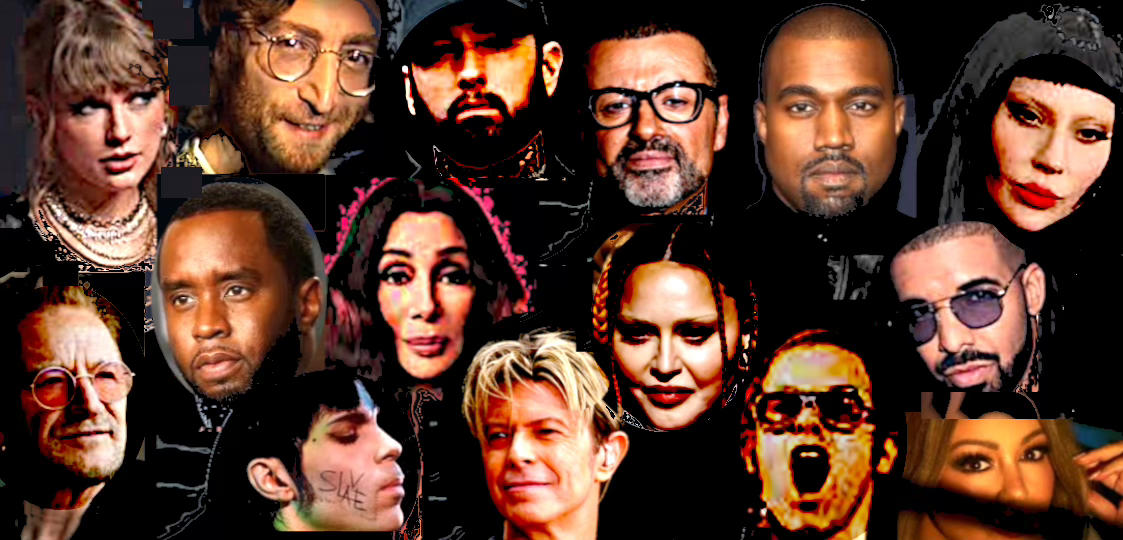
If you want to understand the music business, you could do worse than to start with ego. Not the small, everyday kind that gets you up and off to work every morning, but the sort of swollen, absurd, unbalanced self-belief that convinces an aspiring rock star that the world will come to a halt if it doesn’t listen to their song. Because without that, nothing else in the industry works.
It’s confusing, because artists can also be fragile, sensitive souls who cry in the dressing-room when their album gets a bad review. Yet the same delicate creature is capable of phoning a promoter and demanding a jet; or calling his manager and threatening to walk away from a £5 million advertising shoot if the champagne in the green room isn’t the right brand. Without that arrogance, they’d never have made it beyond bedroom demos.
In the music business, ego is a form of capital. The industry looks at it the way a bank looks at collateral. Whole careers are built on sheer force of personality. At Wembley in 1987, I watched George Michael and Andrew Ridgeley play Wham!’s farewell concert. And how did it start? George walked out onstage alone and did the full Naomi Campbell. He shimmied along the first catwalk. And back. Then pranced across the stage and down the other catwalk – not singing, just waving his butt – milking applause from 80,000 people for a full three minutes. For George, this wasn’t the end of Wham!; it was the start of his solo career. Rather magnificent. And pure ego.
In the music industry, you see it everywhere. Bono can’t order a coffee without turning it into a sermon on the mount. Taylor Swift’s tough business stance isn’t really about business at all; it’s an obsession with keeping herself at the centre of the story. Kanye West wants to own the world. Sting wants to explain it. For these artists, their ego isn’t just their façade, it’s the actual building. The fans enjoy it, and their career requires it.
But ego is hardly guilt-edged capital. Like credit, it can overheat, inflate, collapse. The history of music is littered with stars who flew too close to the sun - whose egos outpaced their talent, or their stamina, or their audience’s patience. But in the music industry even these implosions have business value. A meltdown can be monetised – the farewell tour, the rehab documentary, the comeback album. The ego that once built the castle supplies the rubble for the ruins. Tickets are put on sale for the public to come and inspect.
But hang on — that’s too flippant by half. Let’s take a deeper look.
While a healthy ego may be a necessity for a young artist trying to catch the industry’s attention, everyone who’s been around a while knows - if they’re worth signing, there’ll be something more fragile underneath. Voices and songs that stop you in your tracks often come from childhood damage or neglect. So do big egos. They’re an arrogance of self-defence — armour built against a world that hasn’t been kind.
You look at a cocky young singer clutching their demos. What you listen for in their music is vulnerability, a contradiction to the self-confidence. The bigger the contrast the bigger the artist is likely to become. John Lennon once said, “Part of me suspects I’m a loser, and the other part thinks I’m God Almighty.” That’s it in a nutshell — the divine split that powers great performers. The hurt in the song, the bravado in the stance — two sides of the same survival mechanism. The ego becomes the bodyguard of the inner child. It’s crude, but it works.
All the best artists are surprisingly alike. They’re driven by something indefinable formed in childhood — sometimes a wound, sometimes an awakening. It leaves them with an itch to create, and deep discomfort when they can’t. The fiercest egos often belong to those who’ve been hurt, but even the happiest stars need a protective shell. David Bowie said, “The greatest thing you’ll ever learn is how to survive the contradictions of yourself.”
Anyone who’s managed an artist knows the pattern. A young artist can light up a room with charm and creativity, then, at the first sign of challenge, they flip the switch. The same person who enchanted you at lunch can be hurling chairs by dinner. Rick Rubin once said, “Artists are supposed to be unreasonable — that’s where the magic comes from.”
An artist’s ego isn’t vanity for its own sake; it’s a strategy for survival. Without ego, no art would get made. Imagine the audacity required to write your inner thoughts, set them to music, and insist the world should hear them. It’s a balance of confidence and doubt — the ego is what keeps their creativity intact.
For the professionals working with them, it can be maddening. But surprisingly, despite its reputation, this is where the industry often shines. The best producers and managers know how to draw out the music without breaking the armour. Quincy Jones put it neatly: “You can’t produce an artist with your hands — you do it with your ears and your patience.” Or as Jimmy Iovine said, “You don’t manage artists — you navigate them.”
So — patience, please. On both sides.
The point is not to romanticise dysfunction, but to recognise that the ego, however volatile, is inseparable from the artist’s ability to function creatively at all. And when they have moments of self-doubt – often, just before a gig, backed up with floods of tears – it’s best for a manager not to indulge them.
“For Christ’s sake get on with the fucking show. You can cry afterwards.”
This isn’t a lack of sympathy; it’s a matter of getting them re-booted. Because for a performing artist, an overblown ego isn’t an affliction. It’s their system software.
CLICK SUBSCRIBE - LEAVE YOUR E MAIL
RECEIVE NEW PIECES - IT’S FREE
Great read and totally bang on…
Brilliant. I’m always amazed at how you can conceptualize the elements and their essence!
Once again the master speaks and with this being an “audio book “, we are graced by the Master’s Voice… move over Nipper, even you’ve been replaced ! I can’t wait for the rest of it!!