
MADE FOR EACH OTHER
THE STRANGELY SIMILAR EVOLUTION OF FLAMENCO AND HIP HOP

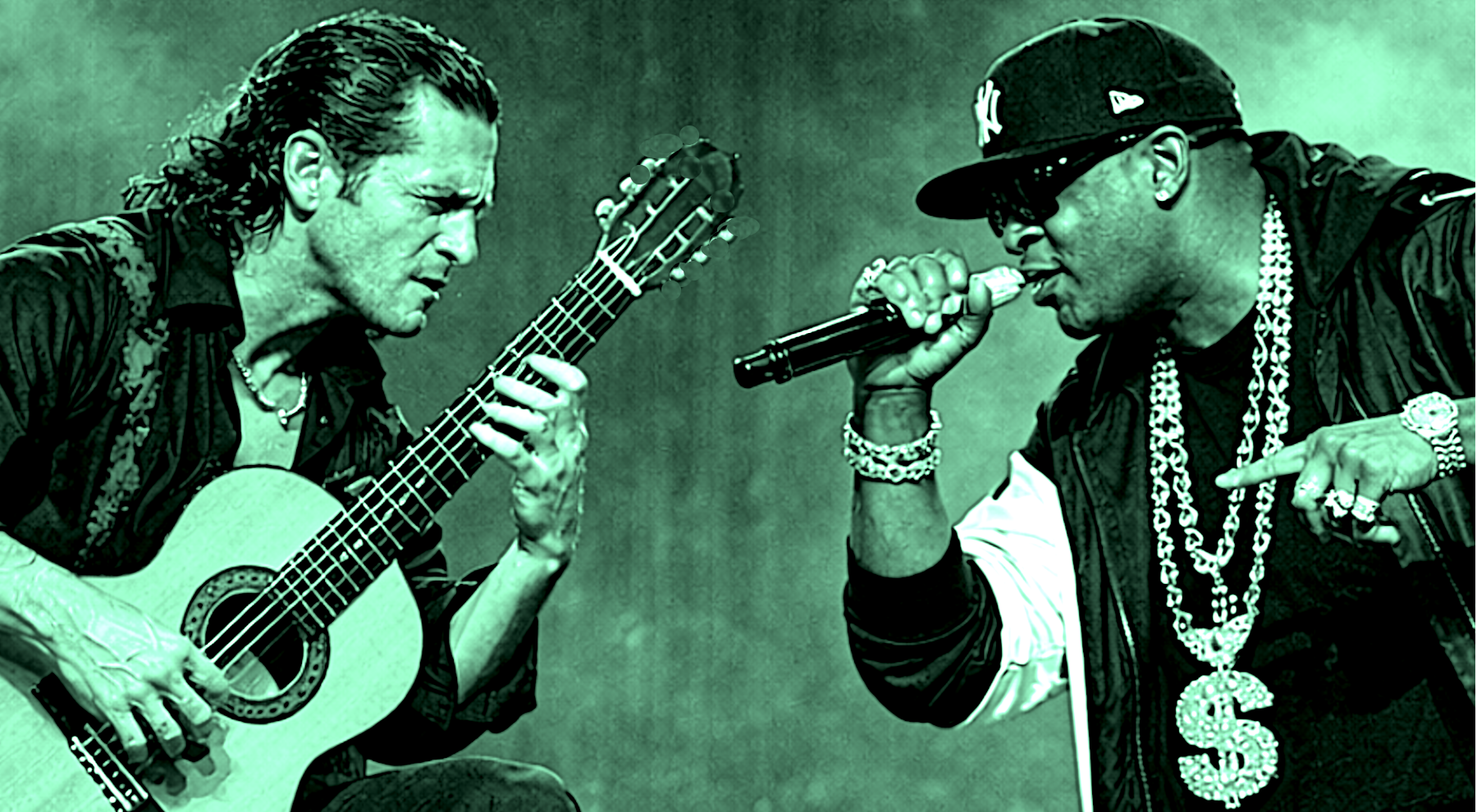
Seeing Bad Bunny at the Super Bowl last week took me back to the Seventies when I was managing the Spanish singer, Antonio Morales – touring Latin America and living in Spain. We wrote a couple of albums together and he got me hooked on flamenco. It was the attitude of the music that attracted me – rather like the blues – pride, pain and grievance, all in the same space.
Around that time, I also started hearing early hip hop, and the two styles felt somehow related. From different continents in different centuries but the same emotional grammar. Today, acts like Ojos de Brujo and Rosalía blend the two together - flamenco claps over hip hop beats, Spanish guitars tangling with loops – and it feels like they were made for each other.
Perhaps they were. Because although flamenco and hip hop were born two hundred years apart, they came from the same impulse. Both began as rebellion, became fashion, then edged toward heritage — the three stages that every successful music movement passes through.
Flamenco emerged in Andalucía in the late eighteenth century among Roma communities and their neighbours — rural Andalusians, Africans, Jews, and Moors. Shut out of most trades, they used flamenco to give themselves a group identity.
A century and a half later, much the same thing happened in the Bronx. In neighbourhoods populated by Black, Puerto Rican, and Caribbean families, young people built a new sound from whatever was available — turntables, microphones, records they’d grown tired of. They weren’t chasing money. They wanted a good night out and a sound that was their own.
Both began as community entertainment and private protest. Flamenco told of rural hardship, hip hop of urban hardship. Both used rhythm and dance to assert themselves. The flamenco dancer’s heel strike and the rapper’s beat drop performed the same function, “I’m here, and I’m not leaving.”
Nick Cave once said, “All art is born out of resistance, even if it ends up framed on a wall.” What often gets missed, though, is the story of what happens in between.
When protest gets popular, business moves in. By the 1860s in southern Spain, flamenco was moving from family gatherings to café cantantes — bars that charged admission and put it on a stage. By the early 20th century, performers like Carmen Amaya and Carlos Montoya were touring internationally.
Hip hop followed the same route. Record companies recognised an energy that could be packaged. By the late eighties, rebellion was on MTV. Streetwear became fashion; poverty became an aesthetic. The gold chains of gangster rap and the embroidered jackets of male flamenco stars serve the same purpose — symbols of status worn by people who started with nothing.
By the time television and tourism got hold of flamenco, it was no longer dangerous. It was dinner-theatre Spain. Hip hop reached the same stage through sponsorships and Super Bowl halftime shows. The Bronx language of protest had become a global entertainment brand, the inevitable cycle of all niche musical modes. What starts as protest ends up as heritage - a respected artform.
Flamenco is now taught in conservatories and protected by UNESCO. It supports festivals, museums, grants, and academic conferences. The same authorities who once tried to suppress it now subsidise it.
Hip hop is moving the same way. Universities teach its history and orchestras perform symphonic versions of Dr Dre. What began at block parties is now part of the cultural establishment, complete with footnotes. Kids who were once arrested for spray-painting walls are now invited to paint murals on city halls.
The pattern isn’t unique. Jazz, rock, reggae, punk — all travelled the same route, from scandal to syllabus – which raises the obvious question: if rebellion in pop is a reliable guide to tomorrow’s mainstream, where is it happening now? Looking around, it’s hard to see. And the principal reason seems to beTikTok.
When punk, hip hop, metal or ska first took root, they weren’t just sounds, they were attitudes. They required commitment. They grew out of places — London, Detroit, Jamaica, the Bronx. You dressed for them, argued for them, excluded people on their behalf. The friction created identity – an “us”.
TikTok removes friction by design. In just a few minutes you can scroll through grime, afrobeats, bedroom pop, reggaeton and retro revival. The structure favours viral fragments over stylistic grouping. Musical movements have always needed time to mature, places to gestate, obstacles to overcome. TikTok dissolves away all three.
When cultural boundaries disappear, so does shared struggle. Without shared struggle, it’s harder to produce an “us”. And without an us”, major musical genres as we’ve known them are not likely to evolve.
If there happens to be another one, it probably won’t grow out of protest. More likely, it will be communal, not confrontational – a blend of every genre we’ve ever known, perhaps put together by AI. Or a succession of cross-cultural hits, seamlessly blending styles from different continents and cultures. And in the face of that, the emergence of a new musical force to match flamenco or hip hop seems hard to imagine.
TO SUBSCRIBE, CLICK AND LEAVE YOUR EMAIL
WEEKLY UPDATES - IT’S FREE
Fantastic article. Thank you. This bit “When protest gets popular, business moves in.” also seems relevant to the modern music industry per se - there seems to be less risk taking, having a punt on new bands/artists and giving them a leg up or testing the waters. Seems like they often wait until an artist is just about self-sufficient before stepping in and saying ‘we’ll take it from here’ so to speak.