
MARKETING MISERY
TURNING PAIN INTO POP

From Victorian ballads to Adele’s 21, the music business has always understood that misery sells. The question isn’t whether it exploits pain — of course it does — but when does that exploitation go too far?
Artists turn pain into art. Audiences buy the result. Shakespeare’s favourites were jealousy, madness and murder. Nineteenth-century opera thrived on doomed heroines coughing blood into a handkerchief. Early popular song traded in dead children and graveside flowers; sheet music of The Dying Child and A Violet from Mother’s Grave were found in every respectable Victorian household.
The 20th century saw the start of the record industry. Songs like Brother Can You Spare a Dime and Gloomy Sunday turned private grief into mass entertainment. But they were pure refinement compared with what was to come. As recording technology improved, misery became more intimate: you could almost feel the singer’s spittle in your ear. Lorraine Ellison howled her way through Stay With Me Baby. Then Janis Joplin gave us three minutes of agony with Cry Baby. After a decade of cheerful Beatles songs, a bit of trauma was just what the public needed.
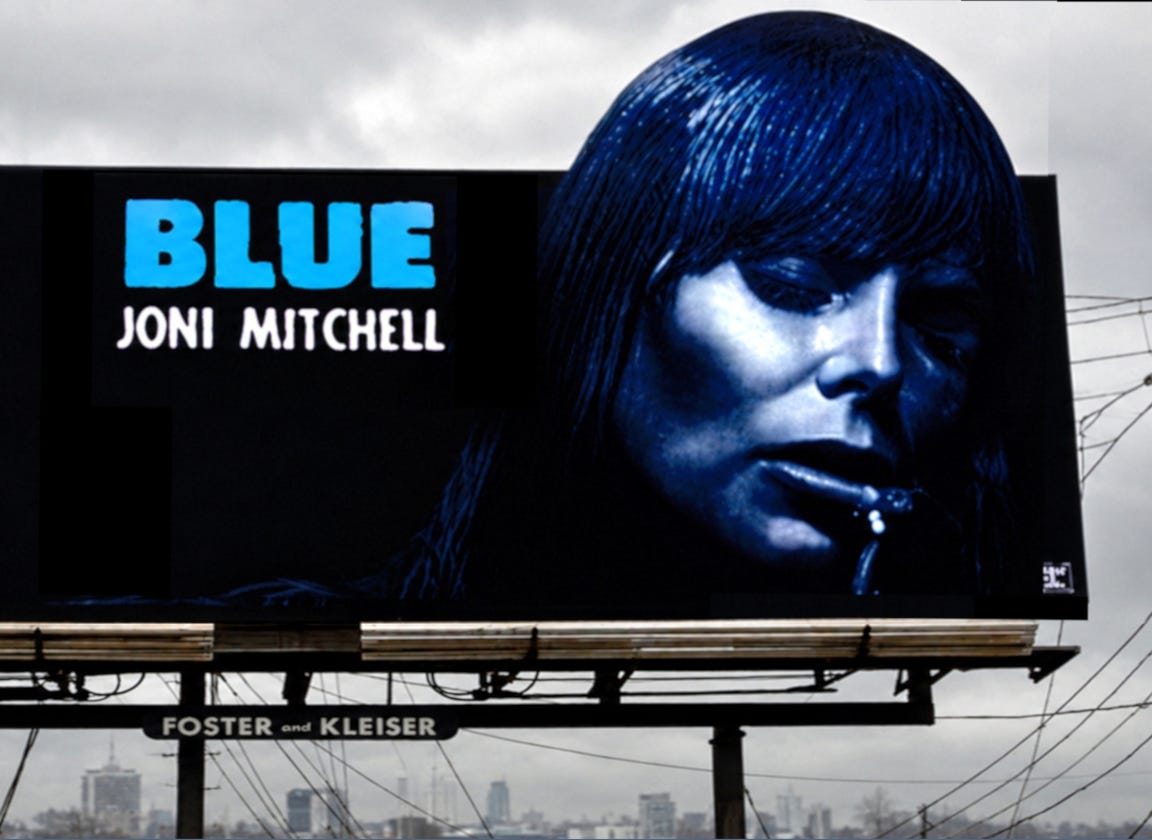
In the 1970s, albums took over and the pain moved from individual songs to the complete life of the artist. Joni Mitchell’s Blue gave us emotional exhaustion sung in a voice that bled. Critics called it “a masterpiece of self-exposure.” Mitchell agreed: “I felt as exposed as a cellophane wrapper on a pack of cigarettes.” Her vulnerability was irresistible – the album went platinum.
A few years later, Fleetwood Mac recorded Rumours and turned emotional chaos into gold. Half the band was sleeping with the other half, though not necessarily the same half as the night before. The songs became veiled messages to each other. Lindsey Buckingham’s Go Your Own Way and Stevie Nicks’s Dreams were break-up letters with hooks. Warners didn’t shy away from the truth; press campaigns hinted at the soap opera behind the scenes and audiences devoured it. Forty million albums later, everyone was rich, heartbroken, and still at each other’s throats. Were the wounds real? Absolutely. Were they carefully nurtured? Even more so.
By the 1990s, therapy albums had become a recognised genre. Authenticity sold. And nothing screamed authentic better than a good nervous breakdown. In The Downward Spiral, Nine Inch Nails sang of their descent into drug-fuelled self-destruction. Eric Clapton’s Pilgrim was an album mourning the death of his son. 808s and Heartbreak was Kanye West’s auto-tuned grief at the loss of his mother – triple platinum misery.
Much darker was Amy Winehouse and Back to Black. Her performance was haunting, but the marketing fed on her public collapse. Her downward spiral seemed inevitable, and she helped it along with “They tried to make me go to rehab.” It was the emblem of her decline and the hook of her biggest hit. And then she died.
You could call her a willing participant – after all, she wrote the song and played the role – but “willing” doesn’t mean “intentional.” The industry took what she offered, then asked for more. Until there was nothing left.
Adele’s 21 perfected the formula without the corpse. Immaculate singing paired with promotion that endlessly returned to how much it hurt. The pain became the product. But this time the product was planned not to kill. The industry likes follow-up albums.
So is this exploitation or not? Sometimes yes; sometimes no; it’s not all industry villainy. Most artists are willing participants. Joni Mitchell described recording Blue as “healing”. Adele tells us, “Songwriting fixes my head”. Ed Sheeran says, “It saves me from going insane.”
George Michael, during his Wham! period, suffered an emotional collapse from a gay relationship gone wrong. He hadn’t come out, so he couldn’t talk about it except through music. The result was A Different Corner – and from the first note you could hear how badly hurt he was. But for George, it was also therapy. By the time he’d recorded it, filmed it, and promoted it, he was pretty much over it, bouncing around again with Wham!. Better still, the song strengthened his claim to being a serious artist and gave him another number one.
The mutual benefit is real. Artists aren’t passive victims. Pain is universal, and music makes it bearable. When artists sing their pain, it makes us feel better about our own. In return, we’re happy for them to get money, or stardom, or whatever else they care to choose from the music industry gift shop.
But mutual benefit doesn’t automatically make it right. In today’s world of social media, marketing misery may mean there’s no off switch. The Victorian parlour could put the music back in the drawer. In the streaming era it keeps on feeding the algorithm. An artist’s survival may depend on staying broken – or at least, looking as if they are – and willing participation becomes a harder thing to judge. Even for the artist themself.
A WEEKLY PIECE - FREE
CLICK SUBSCRIBE AND LEAVE YOUR NAME
Brilliant, as always
Kissing a fool was for me a soulful reveal, cowboys and angels was incredably sad...