
TEARS OR TECHNIQUE
EMOTION EXPRESSED VERSUS EMOTION GENERATED

In David Byrne’s book, How Music Works, I came across an odd line…
“The idea that music is a machine that dredges up emotions in both the performer and the listener is repulsive to some people. They believe music should be an expression of emotion rather than a generator of it.”
Repulsive? It’s a strange word to use. Stranger still is the idea that expressing emotion and generating it can be separated. So I gave it some thought – does our nervous system really know the difference?
There are two ways a piece of music can hit you. One is when you feel you’ve stumbled into someone else’s private life, eavesdropping on them – like Roberta Flack’s Killing Me Softly, or Lorde’s Liability.
The other is when you know you’re being worked on; when the performer uses well-practised stagecraft – playing to the gallery – almost begging you to shed a tear, like Mariah Carey’s Without You.
Critics prefer the first. Playing to the gallery is considered a cheap trick. One artist is called authentic, the other dismissed as kitsch.
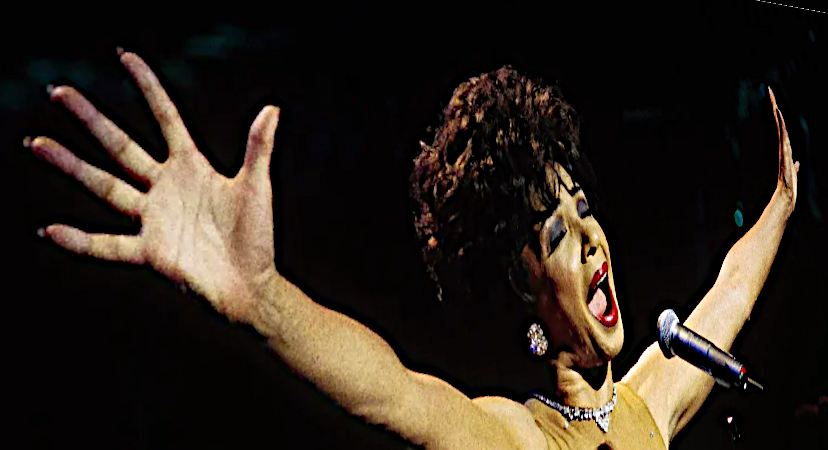
In 2007, when Shirley Bassey sang at Glastonbury, critics accused her of being all out-stretched arms and melodrama. “The subtlety of a flame-thrower,” complained The Guardian. On another occasion, The Independent described her voice – not just her dress – as being “a gold and cream floor-length confection.” Music criticism hijacked by bitchery.
Compare that with Nina Simone’s harrowing 1976 performance of Feelings at the Montreux Jazz Festival, so raw she seemed to disintegrate in front of the piano. The critics loved it. Bassey was showbiz emotion flung in your face; this was lived emotion coursing through the artist’s veins.
Professor Patrik Juslin has labels for it. When we catch the mood of a performer, as with Nina Simone’s palpable despair, it’s called “emotional contagion”. But when an unexpected sound or movement jolts our nervous system, like when Shirley Bassey throws all she’s got into a high note, that’s known as “brain-stem reflex”.
So – going back to David Byrne’s book – Nina Simone represents “emotion expressed” while Shirley Bassey represents “emotion generated”. And according to Professor Juslin, neither is superior. “They’re simply different entry points into our emotional circuitry.”
In most performers, art – as in self-expression – and artistry – the ability to manipulate an audience – exist in balance. But music critics get snooty about the difference. Performers who get caught up in the emotion they’re expressing find themselves called “real artists”; while performers who focus too much on stagecraft are likely to be dismissed as mere “entertainers”.
For instance - Elvis Presley. Was he a real artist? Or just an entertainer?
In his Las Vegas period Elvis became extraordinarily like Shirley Bassey – sequined suits, magnificent voice, mannered hand-gestures. But not for one moment were you required to believe he meant it.
He’d sing, “I can’t help falling in love with you,” and it dripped with insincerity. You could hear his lack of seriousness, the amusement in his voice, the twinkle in his eye. But the half-knowing insincerity was part of his act – he was playing the gigolo. His performance generated emotion precisely because it was a performance. The audience were being “worked”, and they loved it. Critics, though, mostly didn’t.
Which raises an awkward question. If manipulating the audience’s emotions is such a cheap trick, why do we admire it so much in other forms of music?
Opera is one of the most revered art forms in Western music. But really, it’s just a refined version of Elvis, generating emotion rather than expressing it. Over centuries, the aria has been honed into a musical structure guaranteed to produce tears. Feelings are transmitted not by the performer’s belief in the libretto but by vocal perfection. Technique is the trigger. The emotional impact comes purely from performance. And it shamelessly plays to the gallery.
Dance music goes even further. The brain’s pleasure hormones require no sincerity from the performer. An orchestra strikes up a cha-cha and establishes a pulse. You synchronise your body to it and endorphins are released. It matters not one jot that the conductor is in a foul mood, and scowling. Nor does it in a disco if the DJ dislikes the track he’s playing. The biology of dance doesn’t care what they feel. The music generates an emotional high and that in turn triggers dopamine.
All of which makes the debate seem futile – the human nervous system doesn’t distinguish between sincerity and artifice (which is more or less the conclusion David Byrne reached too). Whether you’re weeping at Puccini, carousing to Celia Cruz, or burning it up for Lizzo, your endorphins know only one thing – they’ve been switched on.
Hormones don’t ask whether the singer means it.
TO SUBSCRIBE, LEAVE YOUR EMAIL
UPDATES EACH WEEK - AND IT’S FREE
Spot on with Elvis. It’s made very clear in EPiC, where all the stage performances are studiedly overblown, but undercut with a wink, a nod or a rewritten line..
Thanks Simon
Always great to hear your take on things