
THE GREAT PANIC
AI AND CREATIVITY

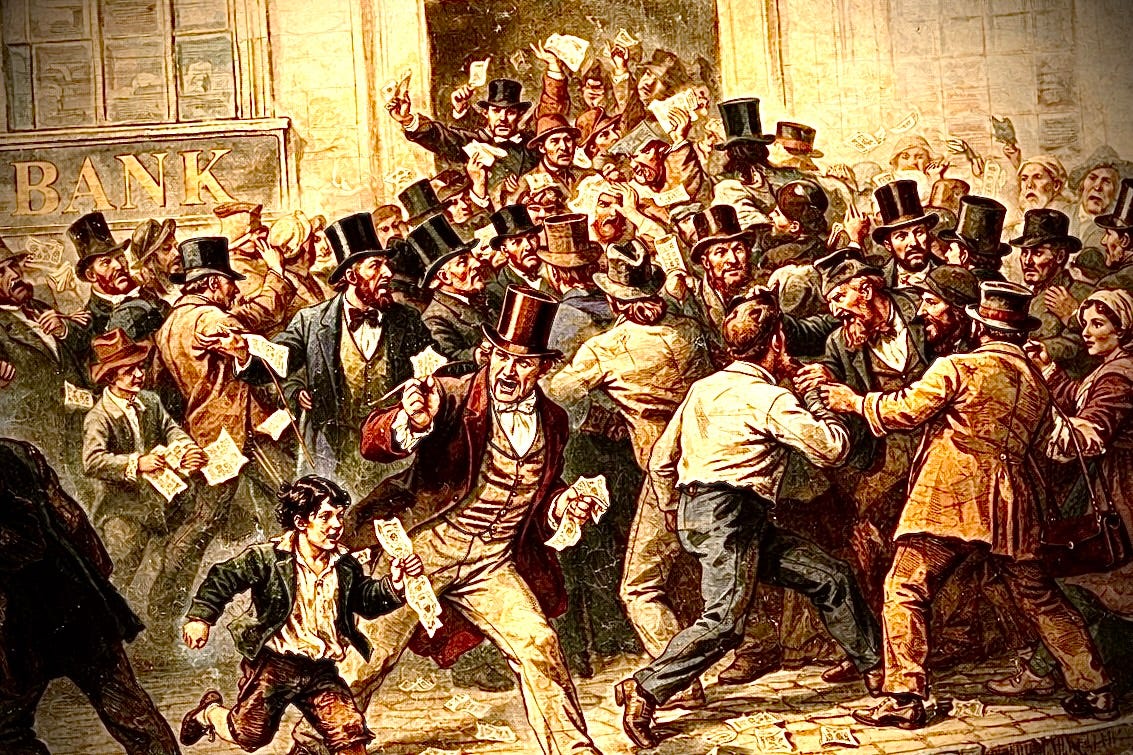
Every few generations, a new technology arrives that we’re told will kill music. First there were records. Then there was radio. And then came cassettes, computers, downloading and streaming.
Now there’s a new panic. Creativity is about to disappear, songs will be written by machine, human performers are headed for extinction. And the culprit, of course, is artificial intelligence.
But hang on – let’s look at history. What happened when the camera was invented?
A machine could now produce a likeness faster, cheaper, and more accurately than an artist could. Portrait painter Paul Delaroche looked at an early photograph and said: “From today, painting is dead.”
The objections sound familiar. Photography was mechanical. It needed no imagination, no spark of genius. The camera simply copied whatever was in front of it. And what happened? Not the death of painting, but Impressionism - the most radical shift in the history of visual art. The start of its most fertile century ever.
So what about AI and music? The loudest complaint is that AI systems shouldn’t be trained on existing music unless every copyright holder gives permission and receives payment. That sounds reasonable enough until you remember one small detail – that isn’t how human beings absorb music.
From the moment we’re born, music seeps into our heads like rainwater into the ground. We hear it on the radio, in restaurants, in taxis, shopping malls, lifts, and films — from marching bands, buskers, neighbours’ stereos, and the tinny speakers of a teenager’s phone three seats away on the train. By the time someone sits down to write their first song, their brain already contains hundreds of thousands of musical fragments — melody, rhythm, chord sequences, vocal tricks. None of it licensed. None of it paid for. All of it delivered unasked for by the world around us.
John Lennon didn’t send royalty cheques to every songwriter he’d ever heard before writing Imagine. Stevie Wonder didn’t seek permission from the soul singers of his childhood before composing his first album. Morrisey didn’t compensate the entire history of English pop for inspiring his lyrics. Human creativity is less clear-cut than that — it works by absorbing everything, then recombining it.
Sometimes a songwriter works consciously, digging through those fragments like an archaeologist sorting pottery shards. Other times the song simply arrives. Every songwriter knows the slightly eerie moment of thinking: “I didn’t write that — it just appeared.”
Marc Bolan once turned up at my flat and said, “You’re going to love this.” Then he sat down with his guitar and played me The Beginning of Doves.
“That’s beautiful,” I told him. “When did you write it?”
“I didn’t,” he said. “I found it on the bus.”
What he meant, of course, was that he’d found it in his head, on the bus. It had appeared from the vast musical archive stored inside his brain — a library trained on a lifetime of listening.
That’s precisely how AI works. It absorbs huge amounts of existing material, picks out patterns and recombines them into new structures — just like a human songwriter. And the possibility of AI being given the same free access to music as every human songwriter is one of the causes of the current panic.
Another one is — if AI helps write songs, creativity will disappear. But this misunderstands where creativity actually happens.
When someone writes a song the traditional way, they’re selecting from possibilities generated by their brain. Melodies appear — chords suggest themselves — lyrics emerge half-formed. Most are terrible; some survive. The songwriter’s job is to recognise which ones are worth keeping.
AI doesn’t remove that process; it merely speeds it up. Instead of your brain offering three possible melodies, the machine might present thirty. Most are still awful, as are its lyrics — because if they’re not grounded in the writer’s own experience, they’re worthless. But as a super-efficient songwriter’s notebook, AI serves a useful purpose.
Where it truly shines is in record production. Producers no longer need to be limited by what can be played or programmed in advance. Talk to it nicely, and AI will let you hear a song twenty different ways before lunch — stripped back, rebuilt, turned inside out, made orchestral, made skeletal, made impossible. Different styles can be summoned, tested, rejected, and reshaped. It can let you hear your song in ways you never imagined. Your guitarist can be Django Reinhardt, your bass player Paul McCartney, your drummer Charlie Watts. If that doesn’t work, turn them into Latin hip-hop with Zeppelin overtones. It’s up to you.
And that’s the whole point. No producer is going to lose their job because of AI. The creative act isn’t the generation of options. It’s their selection. And that final step — the choice — is where creativity lives.
In music, as in all art, the tools are only the means. Even when it’s AI.
CLICK SUBSCRIBE AND LEAVE YOUR EMAIL
IT’S FREE — RECEIVE WEEKLY UPDATES
Excellent, Simon !
Didn't the Musician Union post a full-page add against synths in the english music press back in the 80's ?
Over here, in Belgium, every musician and industry members went mad when the cassette came about. The anger and panic disappeared the second a tax (the private copy tax) was installed.
AI will go the same way: states will need to install a cap and a just tax will go to the content owners (which work may have been, or not, used as training ground).
But, as you say, the great composers and lyricists will still make things out of thin air and that, AI cannot do.
Good and measured take on the current panic.